


When assigning value to a property, the location and surrounding environment is just as important as the home itself. One factor that often goes overlooked by buyers and sellers is noise. Unfortunately, noise pollution can greatly impact your living experience and therefore can hurt the value of your property.
If you live in a noisy neighborhood, you should understand how it affects your home’s worth and what you can do to mitigate the issue.

The Power of Noise for Property Values
Noise levels are negatively correlated with property values. In other words, the louder your neighborhood is, the less you can sell it for.
Depending on the source of the sound, an increase in noise of 10 decibels can decrease your property value by 5% to 10%. However, the exact impact can vary based on other factors.
For example, the time of day that the noise occurs can make a big difference in how disruptive it is. Living near a major road that experiences a high traffic volume during the day won’t be as bad as living near a railway with trains passing through in the middle of the night.
The distance from the source of the noise matters, too. Generally, the farther away you are from the sound, the less impact it will have on your property value.
In some cases, mitigating factors can somewhat offset the problem as well. For instance, living near a school can be noisy, but many families prefer to live within walking distance of their child’s school, so this could actually boost your property value. If you live near a train station in an urban center, the convenient access to public transportation may offset the noise issue for some buyers.
The following are some of the biggest culprits of noise pollution for homeowners:
- Traffic– Proximity to a major highway can have a huge impact on your property value. The closer your house is to the road, the less appealing it will be for most buyers. Not only is the noise a problem, but home buyers also worry about safety and privacy.

- Schools – While there are a lot of benefits to living near a school, they can also cause a surprising amount of noise during the day. If you live in close proximity to a school, you may be able to hear the bell, announcements, fire drills, bus traffic, and other disruptive sounds. After school hours, sports practices and games can be very noisy as well.
- Railways – Active railroad tracks right near your home can decrease your property value significantly, especially if the railway is used by freight trains. These trains can pass through at all hours of the day and night, which can disturb your sleep, startle your pets, and make it impossible to carry out conversations while outside. If you live close enough to the railway, the passing trains can even cause your house to shake.
- Airport – Aircraft noise can have a devastating impact on your home’s value, especially if you live directly under the flight path of departing or arriving planes. A noise increase of just 1 decibel from airplane traffic can reduce a property’s value by up to 1%.
- Industrial Noise – A nearby factory or other industrial facility can negatively affect the value of your home, especially if it stays in operation overnight. In addition to the noise from the facility itself, the neighborhood could experience increased traffic from trucks and concerns about pollution.
- Construction – is loud and disruptive. If your neighborhood is about to undergo a major construction project, you may have a difficult time selling your home. However, construction is a temporary undertaking, so property values can recover.
- Dogs – Although barking dogs aren’t nearly as loud as planes or trains, many home buyers see them as a nuisance. If your next-door neighbor has multiple large dogs that are always out in the yard barking at cars or pedestrians, your property value could suffer.
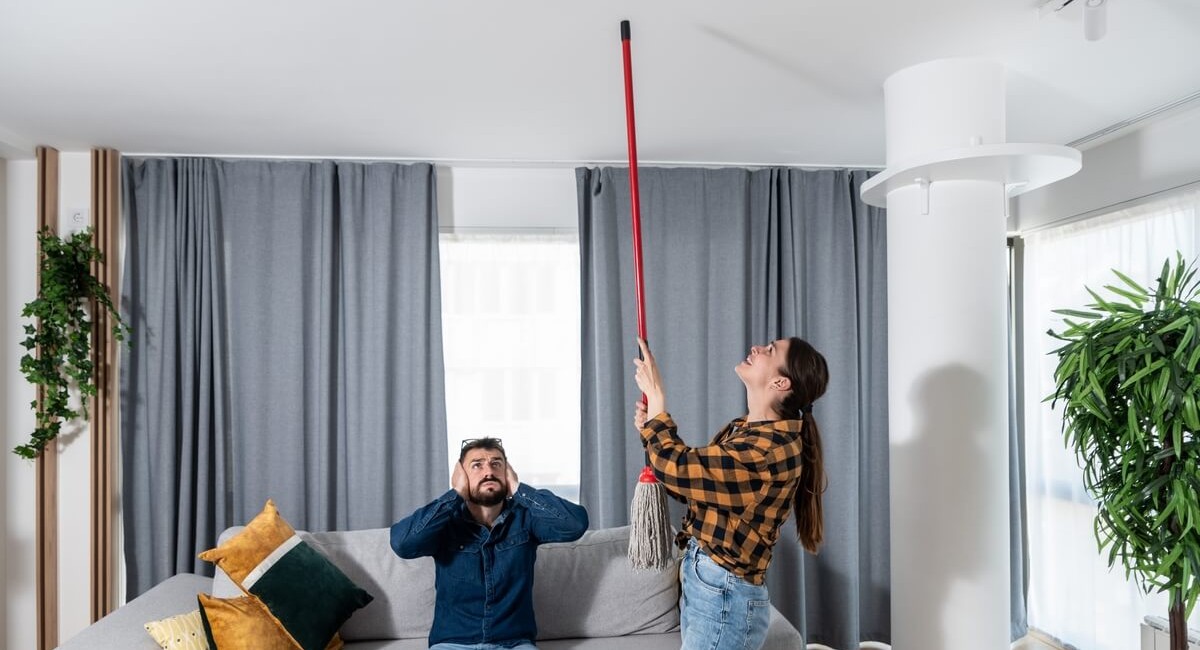
- Shared Walls – Selling a townhouse, condo, or other unit with shared walls comes with some unique challenges. You’re always at the mercy of the neighbors in the adjoining unit. If the property isn’t well insulated, noise can travel extremely easily. Even if your current neighbors are quiet and respectful, there’s always a chance that a loud or disruptive individual will move in.
How to Measure Noise Pollution in Your Home
If you’re curious about the noise levels in or around your property, there are a few ways you can test it. The simplest way to measure noise is to download a decibel meter app, which uses your phone’s microphone.
For a more accurate reading, you could invest in a sound level meter. This is a handheld device that measures noise in decibels.
Try testing the sound levels in different rooms of your house at different times of day. You can also test the noise levels around your yard or driveway.
Sounds at 70 decibels or less are safe at all times. Above 70 decibels, the noise can be disruptive and uncomfortable. Prolonged exposure to sounds above 85 decibels can cause hearing damage.

How to Mitigate Noise to Increase Your Property Value
Although you can’t control the source of the noise in your neighborhood, you can put measures in place to reduce its impact on your living experience. Here are three strategies for mitigating noise to preserve your property value:
- Install Soundproof Windows – High-quality soundproof windows are an excellent investment if you live in a noisy area. The best soundproof windows can almost entirely eliminate the noise that enters your home. When selling your home, note the soundproof windows in your listing description to ease potential buyers’ concerns about noise levels.
- Add Fixtures to Dampen Noise – Certain fixtures can greatly reduce the noise pollution in your home, especially when the sound is coming from an adjacent unit. Carpeting or area rugs can absorb a lot of noise, as can heavy drapes and tapestries. Adding insulation in the walls can help with noise, too.
- Create Barriers With Landscaping – Creative landscaping can help shield your property from the worst of the noise pollution. Hedges, trees, and fences can all create barriers between your lawn and the source of the noise. Adding a source of white noise, like a fountain, can help to block the sounds as well.
Noise pollution is an unfortunate reality that many homeowners have to deal with. Proximity to a major highway, railroad, industrial center, or other noise source can hurt your property value. However, there are ways to offset the noise and make your home more comfortable and appealing to prospective buyers. If you’re concerned with the impact of noise pollution on your home’s value, consult with an experienced real estate agent on how to make the best of the situation.